

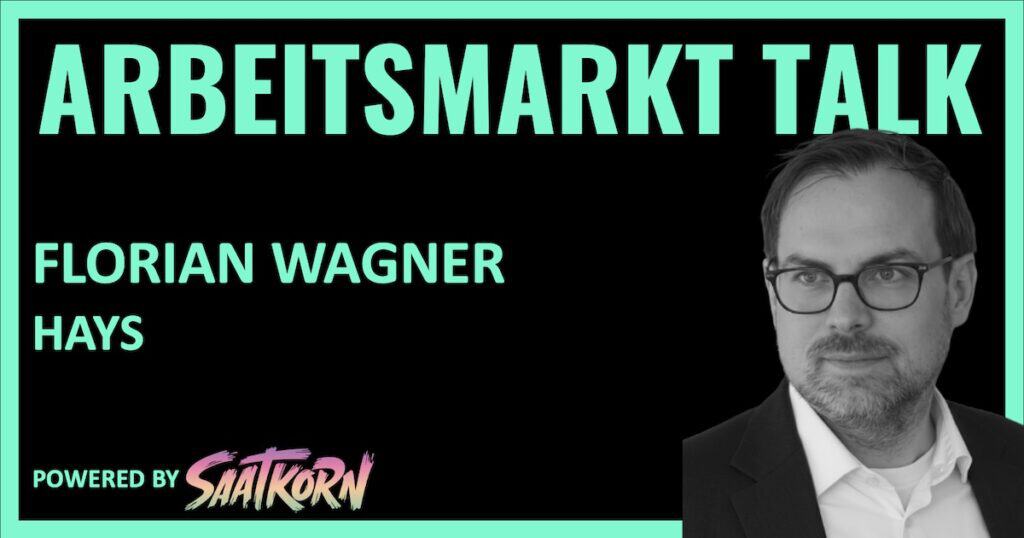
HAYS Fachkräfteindex: Interview mit FLORIAN WAGNER
English version below.
Kürzlich ist der HAYS Fachkräfte-Index für das erste Quartal 2026 veröffentlicht worden – Grund genug, einmal bei Florian Wagner von HAYS nachzuhaken. Auf geht’s:
SAATKORN: Florian, bitte stelle Dich den SAATKORN Leser:innen doch kurz bevor.
Mein Name ist Florian Wagner und ich bin seit 2012 bei der Personalberatung Hays tätig. Als Senior Department Manager HR Interim & Projects unterstütze ich, gemeinsam mit 60 Kolleginnen und Kollegen deutschlandweit, Personalverantwortliche bei operativen und strategischen Fragestellungen. Neben der Beschaffung von freiberuflichen HR-Experten umfasst das Portfolio von Hays die Direktvermittlung sowie die Arbeitnehmerüberlassung.
SAATKORN: Ich verfolge den HAYS-Fachkräfte-Index schon seit vielen Jahren. In letzter Zeit war ich allerdings zunehmend deprimiert, wenn ich die Zahlen gesehen habe. Aber in diesem Quartal gibt es ein leichtes Nachfrageplus. Wie ist das zu verstehen?
Wir haben es hier mit unterschiedlichen Strömungen am Arbeitsmarkt zu tun. Die man erklären muss. Hier wirken Demographie, saisonale Effekte, die Transformation und Investitionszurückhaltung in Unternehmen gleichzeitig aufeinander ein. Das Resultat zeigt sich in der Einstellungspolitik. Ein Nachfrageplus muss daher nicht gleichbedeutend mit der Erholung am Arbeitsmarkt sein. Es kann sich um einen strukturellen Bedarf handeln. Zwar hat sich die Nachfrage nach HR-Fachkräften mit einem Anstieg um 19 Prozentpunkte auf 34 Prozent leicht erholt. Im Vergleich zu anderen Berufsgruppen zählt HR jedoch weiterhin zu den schwächeren Bereichen und liegt deutlich unter dem Niveau des Vorjahresquartals.
SAATKORN: Kannst Du uns sagen, wie sich die aktuelle Einstellungspolitik im Personalbereich gerade gestaltet? Geht es um Nachbesetzungen? Oder um Neueinstellungen? Wo liegt gerade der Fokus?
Das Nachfrageplus bei den HR Business Partnern sowie den Personalberatern und -referenten spricht eine klare Sprache. Die Business Partner (46 Prozent Plus) müssen sich aktuell um den Interessensausgleich zwischen unterschiedlichen Stakeholdern im Unternehmen kümmern, also beispielsweise beim Stellenabbau zwischen Betriebsrat, Führungskräften und HR vermitteln. Das sind erfahrene Mediatoren, die die Ärmel hochkrempeln können. Die Referenten (19 Prozent Plus) werden gesucht, da sie sich vorwiegend um die operativen Personalthemen kümmern und verhältnismäßig wenig kosten. Neu geschaffene Stellen haben im ersten Quartal grundsätzlich Sonderkonjunktur, da hier normalerweise viele Planstellen erstmalig ausgeschrieben werden. Wenn man aber deren Anteil an allen ausgeschrieben HR-Stellen betrachtet, befinden wir uns weiter im Nachbesetzungsmodus, sei es wegen Kündigung oder Rente. Nach wie vor muss jede HR-Position, die besetzt wird, intern hart verhandelt werden.
SAATKORN: Es geht gerade viel um den Umbau der Organisation. Welche Skills muss HR da mit an den Tisch bringen?
HR muss sich im Zuge des Organisationsumbaus wieder deutlich breiter aufstellen. Viele HR‑Organisationen stehen vor der Aufgabe, mit weniger Headcount das gesamte Leistungsspektrum abzudecken– das erfordert stärker generalistisch denkende HR‑Profile. Die müssen strategische, operative und mitarbeiternahe Themen verbinden.
Zentral ist dabei Kommunikation als Führungsinstrument: HR muss Führungskräfte aktiv enablen und sie als Partner auf Augenhöhe dabei unterstützen, personelle Veränderungen klar, empathisch und wirksam zu kommunizieren. Gerade in Transformationssituationen brauchen Führungskräfte konkrete Orientierung, Sprache und Struktur.
Darüber hinaus wird Restrukturierungs‑ und Changekompetenz zum absoluten Muss. HR sollte nicht nur Prozesse begleiten, sondern auch die Auswirkungen von Restrukturierungen auf Kultur, Motivation und Leistungsfähigkeit antizipieren und gestalten. Dazu gehört ein solides Verständnis arbeitsrechtlicher Rahmenbedingungen ebenso wie die Fähigkeit, Unsicherheit im Unternehmen zu moderieren und Veränderung nachhaltig zu verankern.
Ergänzend gewinnt der kompetente Umgang mit neuen Technologien, insbesondere künstlicher Intelligenz, weiter an Bedeutung – sowohl zur Effizienzsteigerung in HR selbst als auch als Beratungsleistung für das Business.
SAATKORN: OK – von Entwarnung also noch keine Spur. Was lässt sich aus Euren Statistiken für HRler:innen ableiten, die gerade auf Jobsuche sind?
Entwarnung gibt es für HRler:innen auf Jobsuche aktuell nicht. Gehaltssteigerungen bei einem Wechsel sind derzeit kaum realisierbar. Besonders für Kandidat:innen aus großen Konzernen ist der Schritt in den Mittelstand häufig nur mit gehaltlichen Abstrichen möglich, da Unternehmen deren Erwartungen nicht in ihr Gehaltsgefüge integrieren können. Zudem hat sich der Arbeitsmarkt spürbar gedreht: Wer überwiegend remote arbeiten möchte, hat inzwischen einen klaren Wettbewerbsnachteil gegenüber Bewerber:innen, die flexibel und regelmäßig vor Ort verfügbar sind.
SAATKORN: wie sieht es über die gesamte Zeit seit Bestehen des HAYS-Fachkräfte-Index in Bezug auf HR aus? Welche Schlüsse ziehst Du, wenn Du Dir die Langzeitbetrachtung anschaust?
Unsere Langzeitanalyse zeigt eine deutliche Verschiebung in der Einstellungsdynamik: Während 2012/2013 noch 66 Prozent der Unternehmen aktiv neue Mitarbeitende rekrutieren, sinkt dieser Anteil bis 2026 auf 41 Prozent. Analog dazu verdoppelt sich die Zahl der Unternehmen, die niemanden neu einstellen und dies auch nicht planen, von 15 Prozent (2012) auf 31 Prozent (2026). Die Einstellungsbereitschaft der Unternehmen hat sich in den vergangenen Jahren spürbar verändert. Immer weniger Betriebe beabsichtigen, neue Mitarbeitende einzustellen.
Das wichtigste Thema für Unternehmen ist die Mitarbeiterbindung. Wenn sie in jemanden investieren, soll diese Person möglichst lange im Unternehmen bleiben. Dafür tun Unternehmen mehr als bei der eigentlichen Einstellung.
Leider sehen wir bei HR auch den berüchtigten Talking-Action-Gap. Die Begriffe wechseln von Jahr zu Jahr, das Muster bleibt gleich: Nicht das Erkennen der Probleme ist die Herausforderung, sondern ihre Übersetzung in den Alltag, in Strukturen und Abläufe. Durch die Langzeitperspektive wird sichtbar, dass Ressourcenknappheit, Zeitdruck und Priorisierungskonflikte immer wieder dazu führen, dass bekannte Herausforderungen nicht angegangen werden. HR hat daher intern immer noch großes Verbesserungspotenzial beim eigenen Standing.
SAATKORN: Zum Schluß noch der Blick nach vorne: wie seht ihr die Entwicklung im Fachkräftemarkt bis zum Ende dieses Jahres, insbesondere bei HR?
Die Entwicklung im Fachkräftemarkt –gerade auch für HR – hängt stark von der konjunkturellen Lage in Deutschland ab, und diese wird aktuell im Drei‑Monats‑Rhythmus korrigiert. Kommen wir wieder spürbar ins Wachstum, wird auch die Nachfrage nach HR‑Profilen anziehen. Bleibt die Wirtschaft hingegen auf dem aktuellen Niveau, werden viele Unternehmen weiter im Nachbesetzungsmodus bleiben – mit entsprechend verhaltener Dynamik im HR‑Arbeitsmarkt.
SAATKORN: Florian, vielen Dank für das Update zum HAYS Fachkräfte-Index Q1 2026. Ich bin gespannt, wie es dieses Jahr weitergeht!
Weiterführende Links:
- Florian Wagner LinkedIn
HAYS Skilled Workers Index: Interview with FLORIAN WAGNER
The HAYS Skilled Workers Index for the first quarter of 2026 was recently published—reason enough to check in with Florian Wagner from HAYS. Let’s get started:
SAATKORN: Florian, please introduce yourself briefly to SAATKORN readers.
My name is Florian Wagner, and I’ve been with the recruitment firm Hays since 2012. As Senior Department Manager for HR Interim & Projects, I work with 60 colleagues across Germany to support HR managers with operational and strategic issues. In addition to sourcing freelance HR experts, Hays’ portfolio includes direct placement and temporary staffing.
SAATKORN: I’ve been following the Hays Skilled Workers Index for many years. Lately, however, I’ve been increasingly discouraged when I’ve seen the numbers. But this quarter shows a slight uptick in demand. How should we interpret this?
We’re dealing with various trends in the labor market here. These need to be explained. Here, demographics, seasonal effects, the digital transformation, and companies’ reluctance to invest are all interacting simultaneously. The result is reflected in hiring policies. An increase in demand does not necessarily equate to a recovery in the labor market. It may simply be a structural need. While demand for HR professionals has recovered slightly, rising by 19 percentage points to 34 percent, However, compared to other occupational groups, HR remains one of the weaker sectors and is significantly below the level of the same quarter last year.
SAATKORN: Can you tell us what the current hiring policy in the HR sector looks like right now? Is it about filling vacancies? Or about new hires? Where is the focus right now?
The increase in demand for HR business partners as well as HR consultants and specialists speaks for itself. Business partners (up 46 percent) are currently tasked with balancing the interests of different stakeholders within the company—for example, mediating between the works council, management, and HR during job cuts. These are experienced mediators who can roll up their sleeves and get to work. Recruiters (up 19 percent) are in demand because they primarily handle day-to-day HR matters and are relatively cost-effective. Newly created positions generally experience a boom in the first quarter, as many permanent positions are typically advertised for the first time during this period. However, when considering their share of all advertised HR positions, we remain in replacement mode—whether due to resignations or retirement. As before, every HR position that is filled must be the subject of tough internal negotiations.
SAATKORN: There’s a lot of focus right now on organizational restructuring. What skills does HR need to bring to the table in this context?
HR must once again position itself much more broadly in the course of organizational restructuring. Many HR organizations face the challenge of covering the entire range of services with fewer staff—this requires HR profiles with a more generalist mindset. They must combine strategic, operational, and employee-focused issues.
Communication as a leadership tool is central to this: HR must actively empower managers and support them as equal partners in communicating personnel changes clearly, empathetically, and effectively. Especially in transformation situations, managers need concrete guidance, language, and structure.
Furthermore, expertise in restructuring and change management is becoming an absolute must. HR should not only support processes but also anticipate and shape the impact of restructuring on culture, motivation, and performance. This includes a solid understanding of the legal framework governing employment as well as the ability to manage uncertainty within the company and embed change sustainably.
In addition, the competent use of new technologies, particularly artificial intelligence, continues to gain importance—both for increasing efficiency within HR itself and as a consulting service for the business.
SAATKORN: OK—so there’s still no sign of the all-clear. What can be inferred from your statistics for HR professionals who are currently job hunting?
There is currently no all-clear for HR professionals looking for work. Salary increases upon switching jobs are hardly feasible at the moment. Especially for candidates from large corporations, the move to a mid-sized company is often only possible with a pay cut, as companies cannot integrate their expectations into their salary structure. In addition, the job market has shifted noticeably: Those who prefer to work primarily remotely now have a clear competitive disadvantage compared to candidates who are flexible and regularly available on-site.
SAATKORN: What has the situation been like for HR professionals over the entire period since the HAYS Skilled Workers Index was established? What conclusions do you draw when you look at the long-term trend?
Our long-term analysis shows a significant shift in hiring dynamics: While 66 percent of companies were still actively recruiting new employees in 2012/2013, this share will drop to 41 percent by 2026. Similarly, the number of companies that are not hiring anyone new and do not plan to do so doubles from 15 percent (2012) to 31 percent (2026). Companies’ willingness to hire has changed noticeably in recent years. Fewer and fewer companies intend to hire new employees.
The most important issue for companies is employee retention. When they invest in someone, they want that person to stay with the company for as long as possible. To achieve this, companies are doing more than they do during the actual hiring process.
Unfortunately, we also see the notorious “talking-action gap” in HR. The terminology changes from year to year, but the pattern remains the same: the challenge is not recognizing the problems, but translating them into everyday practice, structures, and processes. From a long-term perspective, it becomes clear that resource shortages, time pressure, and conflicting priorities repeatedly lead to known challenges not being addressed. HR therefore still has significant room for improvement internally regarding its own standing.
SAATKORN: Finally, looking ahead: how do you see the development in the skilled labor market through the end of this year, particularly in HR?
Developments in the skilled labor market—especially for HR—depend heavily on the economic situation in Germany, which is currently being revised on a quarterly basis. If we return to noticeable growth, demand for HR professionals will also pick up. If, on the other hand, the economy remains at its current level, many companies will continue to operate in replacement mode—with correspondingly subdued momentum in the HR job market.
SAATKORN: Florian, thank you very much for the update on the HAYS Skilled Labor Index Q1 2026. I’m curious to see how things unfold this year!
Further links:
- Florian Wagner LinkedIn