Organizational Performance: Joachim Rotzinger von Ingentis im Interview
Organizational Performance: Joachim Rotzinger von Ingentis im Interview
English version below
Ich begleite Joachim Rotzinger und Ingentis auf SAATKORN bereits seit vielen Jahren. Was mich an Joachim und seinem Team begeistert: Während viele im HR-Tech-Markt über Prozesse, Recruiting oder KI sprechen, denkt Ingentis konsequent Organisation weiter – datenbasiert, strategisch und mit einem klaren Blick auf den Unternehmenserfolg. Umso gespannter war ich auf den neuen Organizational Performance Report 2026. Im Interview sprechen wir darüber, warum gutes Organisationsdesign ein echter Wettbewerbsfaktor ist, weshalb Deutschland gegenüber den USA zurückliegt und welche Konsequenzen Unternehmen jetzt ziehen sollten.
Auf geht’s:
SAATKORN: Joachim, bitte stelle Dich den wenigen SAATKORN Leser:innen, die Dich nicht kennen, einmal kurz vor.
Gerne. Mein Name ist Joachim Rotzinger, ich bin CEO des Softwareanbieters Ingentis. Seit mehr als 20 Jahren beschäftige ich mich mit HR-Tech und der Frage, wie Unternehmen ihre Organisationen zukunftsfähig gestalten können. Bei Ingentis unterstützen wir Unternehmen dabei, ihre Organizational Performance nachhaltig zu steigern, also Organisationen leistungsfähiger, anpassungsfähiger und zukunftssicher aufzustellen. Dafür verbinden wir Organizational Analytics, Organizational Design und Strategic Workforce Planning auf einer integrierten Plattform. Unsere Lösungen machen Unternehmensstrukturen und Workforce-Daten transparent, ermöglichen umfassende Analysen zum Strategie-Fit der unternehmerischen Aufstellung. Darauf aufbauend ermöglichen wir datengestützte Simulationen zukünftiger Szenarien und helfen Unternehmen so, bessere organisationale Entscheidungen zu treffen. Mehr als 2.000 mittelständische und Enterprise-Unternehmen weltweit in über 50 Ländern nutzen unsere Plattform bereits, und wir freuen uns über konstantes globales Wachstum.
Warum Organizational Performance jetzt auf die Agenda gehört
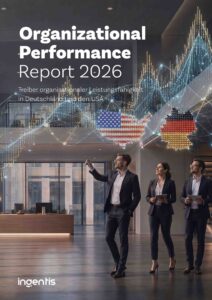
SAATKORN: Vor einigen Wochen ist der Organizational Performance Report 2026 erschienen. Warum braucht es diese Studie und wer wurde hier befragt?
Wir erleben, dass Unternehmen viel Energie in Talente, Führung und Kultur investieren. Die Gestaltung der Organisation selbst wird dagegen häufig noch unterschätzt. Dabei entscheidet gerade sie darüber, ob Menschen ihr Bestes geben können: Dave Ulrich hat gezeigt, dass Organisationsdesign einen rund viermal größeren Einfluss auf den Geschäftserfolg haben als individuelles Talent allein. Der „State of Organizations Report“ von McKinsey hat das Thema international stärker ins Blickfeld gerückt. Dennoch fehlten bislang Antworten auf einige zentrale Fragen. Nämlich: Wie trägt gute Organisation zur Leistungsfähigkeit von Unternehmen bei, was wirkt auf diese Performance ein und wie steht es darum in unseren Unternehmen? Also haben wir mit Professor Dr. Stephan Fischer von der Hochschule Pforzheim im Frühjahr dazu gut 1.200 Beschäftigte in deutschen und amerikanischen Unternehmen mit mehr als tausend Mitarbeitenden online befragt. In den USA waren es 605, in Deutschland 621. Darunter waren 110 Führungskräfte dreier Hierarchiestufen in Deutschland und 101 in den USA.
SAATKORN: Wie definiert Ihr “Organizational Performance”?
Vereinfacht gesagt verstehen wir darunter den Beitrag zum Geschäftserfolg, der sich durch die Gestaltung einer Organisation erklären lässt – also durch Strukturen, Verantwortlichkeiten, Zusammenarbeit, Entscheidungswege und die Art, wie Menschen organisatorisch zusammenwirken. Das Modell, das Stephan Fischer seinen Berechnungen zugrunde legt, ist demgegenüber etwas komplexer. Es greift zurück auf Studien zu „High Performance Work Systems“ und definiert Organisationale Performanz als Zusammenspiel von vier Treibern, nämlich Effizienz, Zielorientierung, Innovationsförderlichkeit und Anpassungsfähigkeit der Organisation, sowie drei Effektdimensionen, nämlich personale, produktive und finanzielle Leistungsfähigkeit.
Deutschland verliert den Anschluss
SAATKORN: Was sind die Kernergebnisse des Reports?
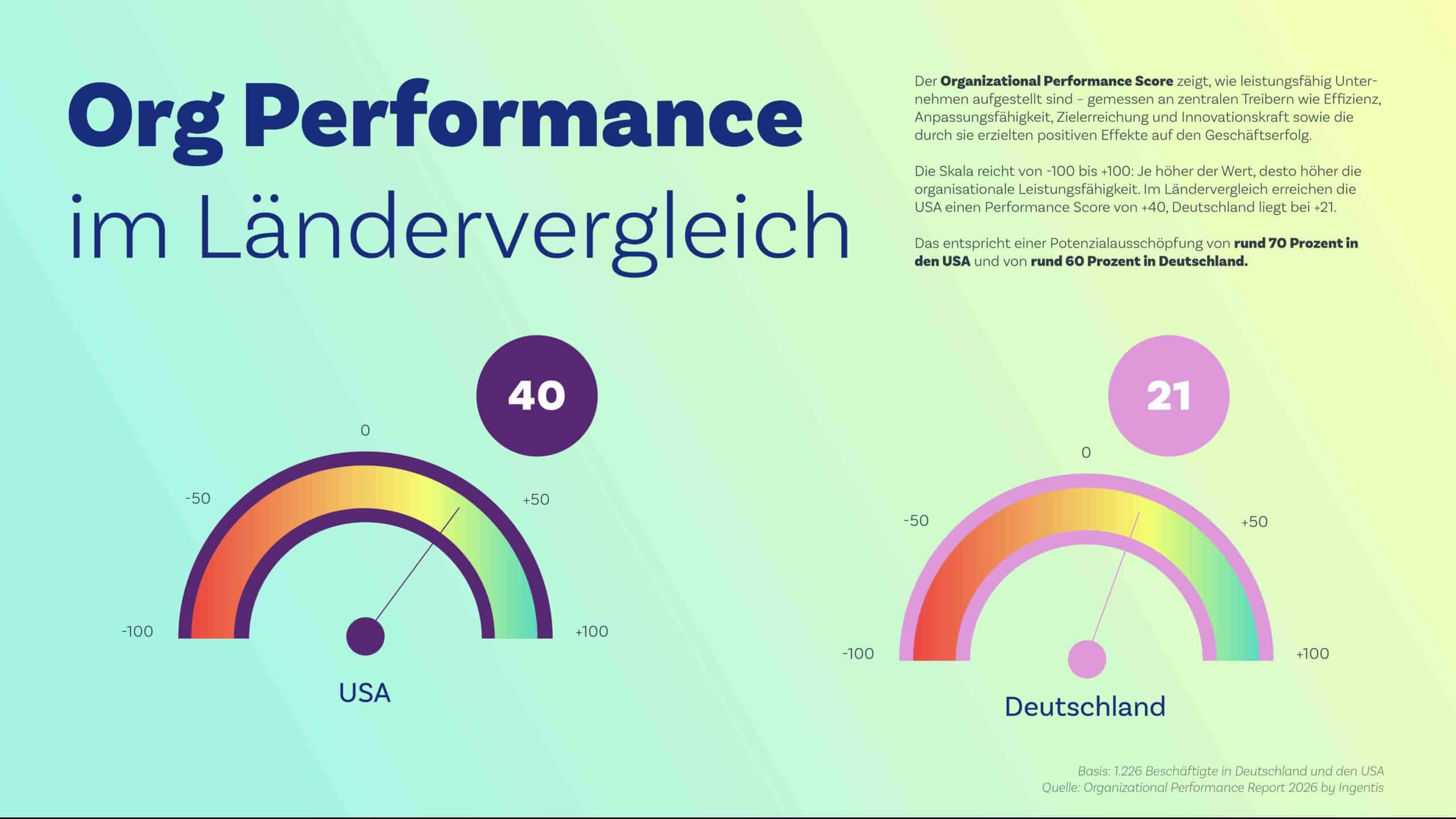
Das wichtigste Ergebnis: Weder amerikanische noch deutsche Unternehmen realisieren ihr Potenzial an Organizational Performance zufriedenstellend. Gemäß unserer Befragung gelingt das in den USA nur zu 70 Prozent, in Deutschland – einem Land, das sich mal als Organisationsweltmeister verstand – sogar nur zu 60 Prozent. In fast allen Treibern und Effektdimensionen liegen die Deutschen deutlich hinter US-Befragten zurück. Diese Lücke zu den USA erklärt sich besonders dadurch, dass die befragten Deutschen weniger Bewusstsein und Wertschätzung für die Organisationsthematik per se zeigen, erkennbare Defizite bei Change- und Reorganisationsfähigkeit sehen sowie datenbasierte Methoden der Visualisierung, Analyse und Gestaltung von Organisationsaspekten weniger schätzen und nutzen als ihre transatlantischen Peers.
SAATKORN: Welche Ergebnisse haben Dich besonders überrascht?
Da gibt es wirklich ein paar Details, die ich ausgesprochen alarmierend finde. Zum Beispiel, dass nur knapp 17 % der befragten Deutschen Reorganisationen als erfolgreich erleben, dass fast jeder zweite Befragte in Deutschland angibt, Reorganisationen verliefen mühsam und zäh und nur jeder dritte die Bedeutung erkennt, die das Organisationsdesign für den Geschäftserfolg der Zukunft hat. Zum Vergleich: In den USA sehen diese Bedeutung immerhin knapp 56 Prozent der Befragten. Und was daran das Erschreckendste ist: Diese Schwächen drücken nicht nur auf den Geschäftserfolg, sondern auch auf die Stimmung! Die Zufriedenheits- und Zuversichtswerte sind in den USA um knapp zehn Prozentpunkte höher als in Deutschland. Und sie korrelieren direkt mit dem Organisationsvermögen und dem Erfolg von Reorganisationen. Da verschenken wir wirklich enormes Potenzial, das wir ohne äußere Einflüsse heben könnten – indem wir einfach besser organisieren und reorganisieren.
Drei konkrete Empfehlungen für Unternehmen
SAATKORN: Welche strategischen Handlungsempfehlungen ergeben sich auf Basis des Reports für Unternehmen, insbesondere in Deutschland?
Erstens: Organisation als Leistungs- und Zufriedenheitsbooster verstehen! Anpassungsfähige, zielorientierte, innovationsförderliche und effiziente Strukturen und Abläufe sind ein Wettbewerbsfaktor.
Zweitens: Organisations- und Workforce-Aspekte zusammendenken! Was nützen die richtigen Talente zur richtigen Zeit am richtigen Ort, wenn sie dort nicht den Rahmen vorfinden, in dem sie ihr Bestes geben können?
Drittens: Datenbasiert entscheiden und gestalten! Wir haben alle nötigen Daten in unseren Unternehmen, um Organisationen und Belegschaften leistungsförderlich aufzustellen. Wir nutzen sie nur zu wenig oder, wie die Studie auch zeigt, im falschen Mindset: Gerade die Deutschen nutzen Daten noch stark zum Dokumentieren, Planen, Fortschreiben. Die US-Befragten legen demgegenüber eine transformativere Haltung an den Tag. Sie nutzen ihre Daten etwas häufiger zum Vorausschauen, Simulieren und Umbauen.
Download-Link für den Report
SAATKORN: Wo kann man den Report downloaden?
Das geht auf unserer Webseite . Wir freuen uns über alle, die das Potenzial ihrer Organisation besser verstehen und gezielt heben möchten. Dafür liefert der Report hoffentlich viele hilfreiche Impulse.
SAATKORN: Joachim, herzlichen Dank für das Interview und weiterhin viel Spaß und Erfolg mit Ingentis!
Weiterführende Links
Organizational Performance: An Interview with Joachim Rotzinger of Ingentis
I’ve been following Joachim Rotzinger and Ingentis on SAATKORN for many years now. What inspires me about Jo and his team is this: While many in the HR tech market talk about processes, recruiting, or AI, Ingentis consistently takes a broader view of organizational design—one that’s data-driven, strategic, and focused on corporate success. That’s why I was all the more excited about the new Organizational Performance Report 2026. In this interview, we discuss why good organizational design is a real competitive advantage, why Germany lags behind the U.S., and what steps companies should take now.
Let’s get started:
SAATKORN: Joachim, please briefly introduce yourself to the few SAATKORN readers who don’t know you.
Gladly. My name is Joachim Rotzinger, and I’m the CEO of the software provider Ingentis. For more than 20 years, I’ve been working in HR tech and exploring how companies can make their organizations future-proof. At Ingentis, we help companies sustainably improve their organizational performance—that is, make their organizations more efficient, adaptable, and future-proof. To do this, we combine organizational analytics, organizational design, and strategic workforce planning on an integrated platform. Our solutions provide transparency into corporate structures and workforce data, enabling comprehensive analyses of how the company’s structure aligns with its strategy. Building on this, we enable data-driven simulations of future scenarios, helping companies make better organizational decisions. More than 2,000 midsize and enterprise companies worldwide in over 50 countries are already using our platform, and we’re pleased to see steady global growth.
Why Organizational Performance Needs to Be on the Agenda Now
SAATKORN: The Organizational Performance Report 2026 was published a few weeks ago. Why is this study necessary, and who was surveyed for it?
We’re seeing companies invest a great deal of energy in talent, leadership, and culture. The design of the organization itself, however, is often still underestimated. Yet it is precisely this that determines whether people can perform at their best: Dave Ulrich has shown that organizational design has roughly four times the impact on business success than individual talent alone. McKinsey’s “State of Organizations Report” has brought this topic more into the international spotlight. Nevertheless, answers to some key questions have been lacking until now. Namely: How does good organizational design contribute to a company’s performance, what factors influence this performance, and what is the current state of affairs in our companies? So, in the spring, we partnered with Professor Dr. Stephan Fischer from Pforzheim University to conduct an online survey of over 1,200 employees at German and American companies with more than 1,000 employees. There were 605 respondents in the U.S. and 621 in Germany. Among them were 110 managers across three hierarchical levels in Germany and 101 in the U.S.
SAATKORN: How do you define “organizational performance”?
Put simply, we understand it as the contribution to business success that can be explained by the design of an organization—that is, by structures, responsibilities, collaboration, decision-making processes, and the way people interact within the organization. The model on which Stephan Fischer bases his calculations, however, is somewhat more complex. It draws on studies of “High Performance Work Systems” and defines organizational performance as the interplay of four drivers—namely, efficiency, goal orientation, innovation-friendliness, and organizational adaptability—as well as three dimensions of impact: personnel, productive, and financial performance.
Germany Is Falling Behind
SAATKORN: What are the key findings of the report?
The most important finding: Neither American nor German companies are satisfactorily realizing their potential for organizational performance. According to our survey, this is achieved only 70 percent of the time in the U.S., and in Germany—a country that once considered itself the world champion of organization—only 60 percent of the time. In almost all drivers and effect dimensions, the Germans lag significantly behind U.S. respondents. This gap with the U.S. can be explained in particular by the fact that the Germans surveyed show less awareness of and appreciation for organizational issues per se, perceive noticeable deficits in their ability to manage change and reorganization, and value and use data-driven methods for visualizing, analyzing, and designing organizational aspects less than their transatlantic peers.
SAATKORN: Which results surprised you the most?
There are really a few details that I find extremely alarming. For example, that just under 17% of the Germans surveyed view reorganizations as successful, that nearly half of respondents in Germany say reorganizations are tedious and protracted, and that only one in three recognizes the importance of organizational design for future business success. By comparison, in the U.S., nearly 56 percent of respondents recognize this importance. And what’s most alarming is that these weaknesses not only weigh on business success but also on morale! Satisfaction and confidence levels in the U.S. are nearly ten percentage points higher than in Germany. And they correlate directly with organizational capability and the success of reorganizations. We’re truly squandering enormous potential that we could harness without external influences—simply by organizing and reorganizing more effectively.
Three Concrete Recommendations for Companies
SAATKORN: What strategic recommendations for action do you derive from the report for companies, particularly in Germany?
First: View organization as a performance and satisfaction booster! Adaptable, goal-oriented, innovation-friendly, and efficient structures and processes are a competitive advantage.
Second: Consider organizational and workforce aspects together! What good is having the right talent in the right place at the right time if they don’t find the environment there where they can perform at their best?
Third: Make decisions and shape the future based on data! We have all the necessary data within our companies to structure organizations and workforces in a way that enhances performance. We simply don’t use it enough—or, as the study also shows, we use it with the wrong mindset: Germans, in particular, still rely heavily on data for documentation, planning, and updating. In contrast, U.S. respondents demonstrate a more transformative approach. They use their data somewhat more frequently for forecasting, simulating, and restructuring.
Download link for the report
SAATKORN: Where can people download the report?
You can do so on our website. We welcome anyone who wants to better understand and purposefully leverage their organization’s potential. Hopefully, the report will provide many helpful insights for this purpose.
SAATKORN: Joachim, thank you very much for the interview, and we wish you continued enjoyment and success with Ingentis!