
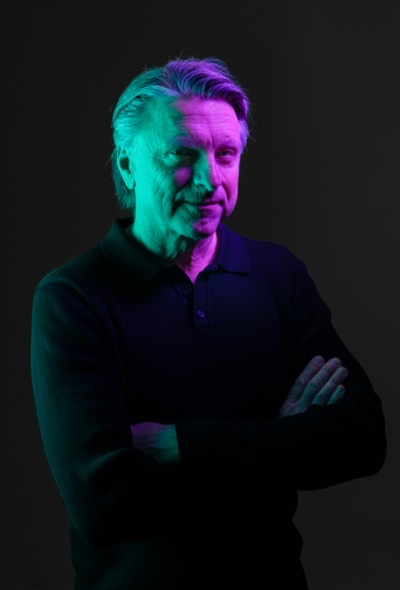
Everyone is familiar with the classic business portrait: arms crossed, a forced smile, a grey background. Yet in the digital age, this stiffness signals one thing above all else: interchangeability. We speak to the renowned portrait and reportage photographer Frank Lübke from Best Business Photography about how modern companies stand out from the crowd with vibrant visual language, and why having the courage to show personality is the biggest factor for success in marketing. SAATKORN: When we think of business photography, most people immediately picture something very sterile. Why is this traditional style – often perceived as boring – still so widespread in the corporate world?
This is mainly down to old viewing habits and a certain ‘play-it-safe’ mentality. For a long time, many companies believed that professionalism was synonymous with formal rigour. They simply didn’t want to make any mistakes and therefore opted for the bare minimum: the classic studio background and the standard pose with arms crossed. The problem is simply this: these photos don’t tell a story. They convey neither energy nor values. In a digitalised world where we’re inundated with visual content every second, boredom is the surest way to be completely overlooked.
SAATKORN: You advocate the approach that business photography must be lively and exciting. How does that work in practice? What do you do differently at Best Business Photography?
For me, modern business photography is essentially high-quality reportage and magazine photography. It’s about showing people as they are, in their element and in their real working environment. I take the subjects out of their comfort zone and capture them in dynamic situations – in motion, engaged in genuine interaction, or in a setting that creates visual tension. A good business photograph should have the quality of an editorial image from a major magazine such as *Stern* or *Focus*. It must make the viewer stop and take notice. If someone sees the image and thinks, ‘Wow, I’d like to work with this person or this company’, then the photograph has done its job.
SAATKORN: Many traditional companies may fear that too much creativity or an unconventional look could come across as unprofessional. How do you allay this fear for your clients?
Authenticity and vitality are the new professional standard today. Clients, partners and even potential new employees are now looking for approachability and genuine values. A CEO who is photographed looking relaxed, approachable and in a modern setting comes across as infinitely more confident and competent than someone hiding behind a stiff mask and a suit. After all, creativity doesn’t mean we have to dress up in clown costumes. It means visually capturing the company’s personality and uniqueness with precision. Having the courage to embrace one’s own identity builds trust – and trust is the hardest currency in business.
SAATKORN: What simple advice can you give to companies that want to modernise their visual identity but don’t know where to start?
The first step is to throw the standard internal checklists out the window. Instead, ask yourselves: What sets us apart? What do we stand for? What are our goals? This identity must form the basis for the visual concept. And the second important point: find a photographer who can not only operate a camera, but who can also guide and inspire people. A vibrant photograph is created through the interaction between the photographer and the subject. If the chemistry is right and the vision is clear, there’s absolutely no chance of the final result being dull.
SAATKORN: Thank you very much for the interview – and we wish you continued success with Best Business Photography!
Further links:
- Frank Lübke on LinkedIn
- Website